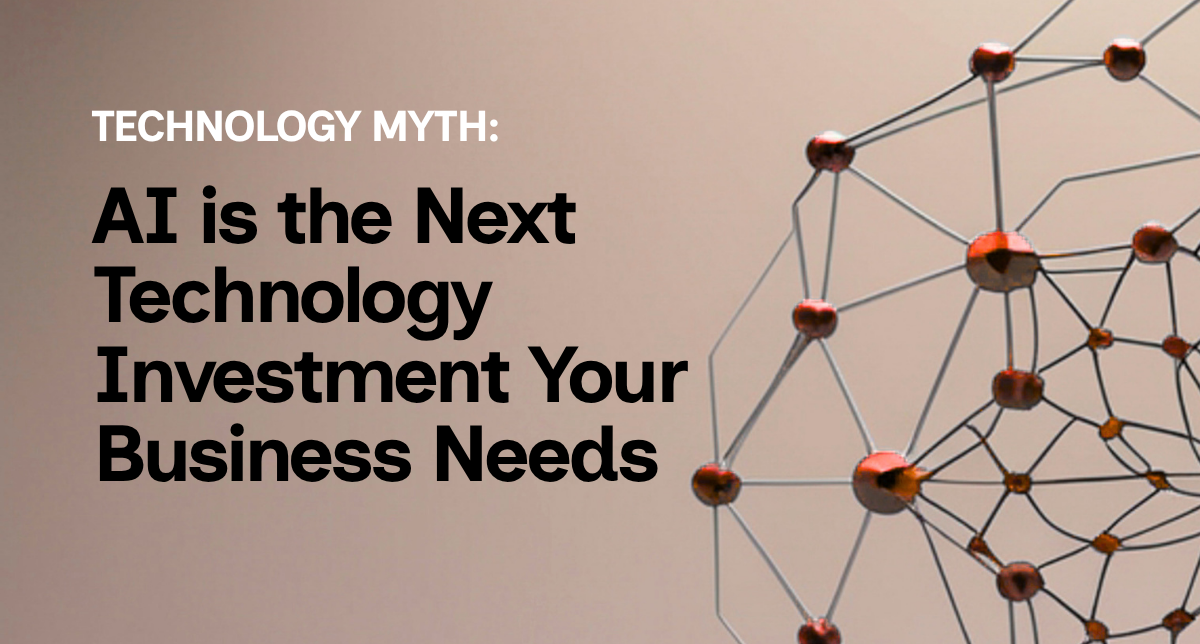
Artificial intelligence is dominating business conversations. Whether it's a networking event in Brisbane, a Chamber breakfast in Inverell
or a discussion with business owners across New England, the same question keeps surfacing: 'Should we be investing in AI?' It's a fair
question, but it often starts in the wrong place.
Businesses don't want to be left behind. New tools appear every week and every headline promises dramatic productivity gains. AI genuinely has enormous potential, but believing it can compensate for existing technology problems is where many organisations come unstuck.
Many organisations don't have an AI problem. They have a workflow problem. Information is duplicated across systems, staff spend valuable time searching for documents, software doesn't communicate and simple tasks require unnecessary manual effort. Introducing AI into that environment rarely fixes those issues. More often, it accelerates them.
Technology is much like building a house. If the plumbing leaks and the foundations are moving, installing a luxury kitchen won't solve the underlying problems. AI is incredibly capable, but it still relies on organised information, reliable systems and consistent processes to produce meaningful results.
Technology conversations should begin by understanding how work actually happens. Where does the team lose time? Which tasks are repeated every day? Where does information become disconnected? Once those questions are answered, the right technology solution becomes much clearer.
Businesses with secure Microsoft 365 environments, reliable connectivity, structured data and consistent workflows are finding AI much easier to adopt because the foundations already exist. They aren't replacing good systems with AI; they're extending good systems with AI.
Regional businesses are practical. We're finding across Inverell and the broader New England region, technology investments are judged on whether they genuinely make work easier, reduce risk and support growth. That's exactly the way technology decisions should be made.
Many organisations also underestimate the capability of technology they already own. Microsoft 365 includes collaboration, document management, communication, automation and security features that are often only partially used. Before adding another subscription, existing investments deserve a closer look.
None of this suggests businesses should ignore AI. The opportunity is real. AI is already reshaping research, administration, customer service and workflow automation. The difference is understanding where AI belongs within the broader technology strategy rather than treating it as the strategy itself.
A better question than 'Which AI platform should we buy?' is 'What frustrates the team every week?' Re-entering data, searching for information, manually following up customers or moving data between systems are all opportunities to improve productivity. Sometimes AI is the answer. Sometimes better workflow design or integration delivers an even better result.
Technology should quietly remove friction. The businesses that will benefit most from AI won't necessarily spend the most on software.
They'll be the ones making thoughtful decisions about people, processes and technology working together.
Before investing in another AI platform, review the technology already supporting the business. A practical technology review often uncovers opportunities to improve productivity, simplify systems and prepare the business for future AI adoption.
ZaheZone’s Technology Health Checks are designed to provide a clear, practical snapshot of a business’s technology environment.
These reviews typically assess:
• Communications systems
• Cyber security posture (SMB1001 aligned)
• Microsoft 365 configuration and licensing
• Overall IT infrastructure
References:
Microsoft 365 Documentation

AI meeting tools can record more than conversation. Understand where your business data goes, who can access it and what your business remains responsible for.





.png)

At ZaheZone, we take your business growth seriously, which is why we’re with you every step of the way. To discover how we can help you optimize and scale your IT, contact us today.

Leave a Comment